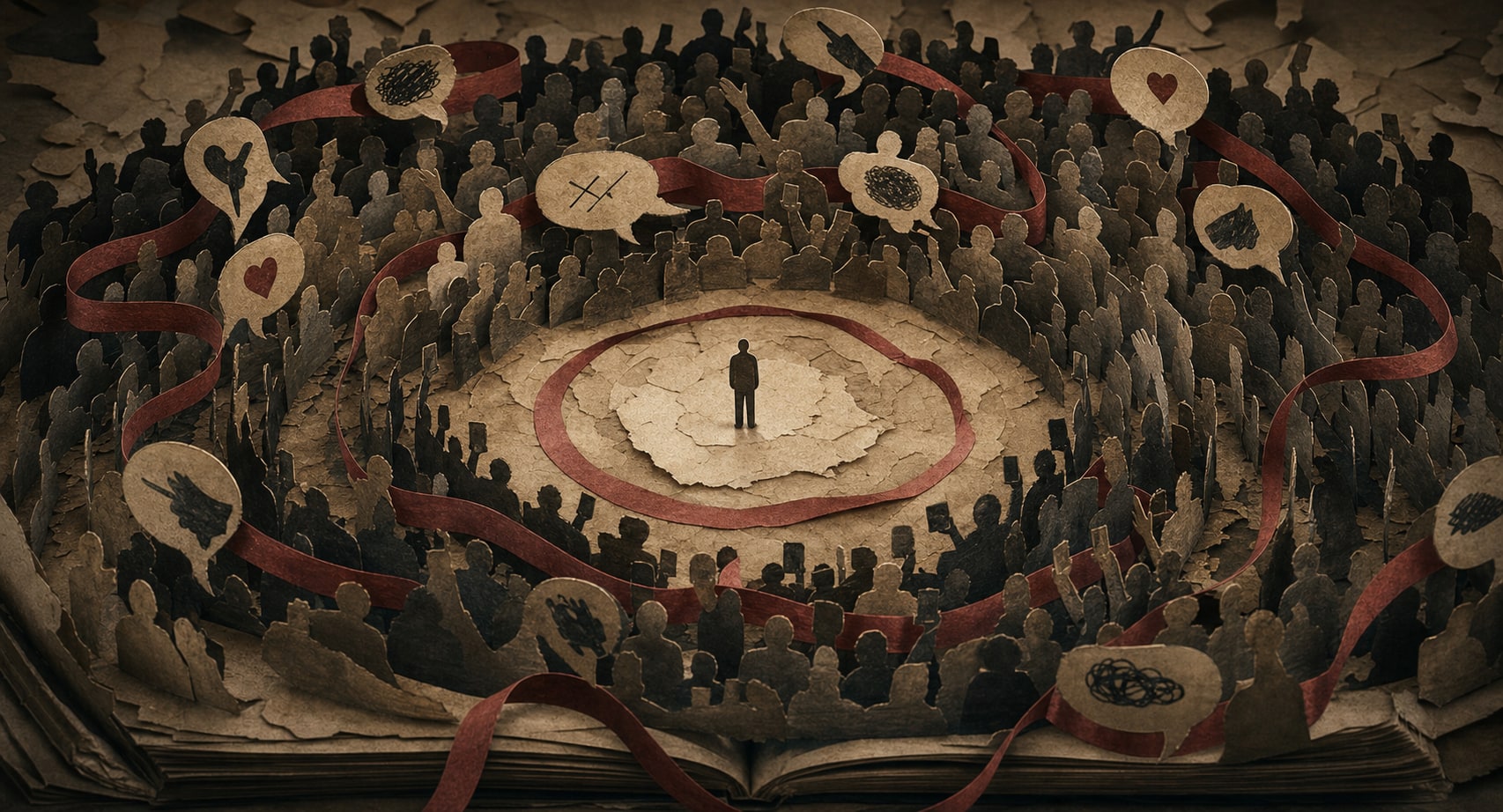
How people become categories
Would You Kill Hitler?
Do you remember the question:
If you could go back in time and murder Hitler before he committed his atrocities, would you?
It was a common thought experiment. Many people answer yes.
Kill one man. Save millions.
Easy.
Except it is only easy because we have perfect hindsight. People living through Hitler’s rise had no such advantage.
They had to judge the threat without knowing what would happen next—just as people do today.
Political violence is still justified in familiar language: to prevent something worse, punish, avenge, liberate, defend or deliver what someone believes to be justice.
This essay asks how a political opponent becomes someone whose death can be imagined as necessary.
But its central question is simpler:
Why do so many ordinary people cheer when someone they have never met is murdered?
“Ordinary” does not mean typical. It means people who do not see themselves as violent or cruel, yet can come to see a killing as deserved.
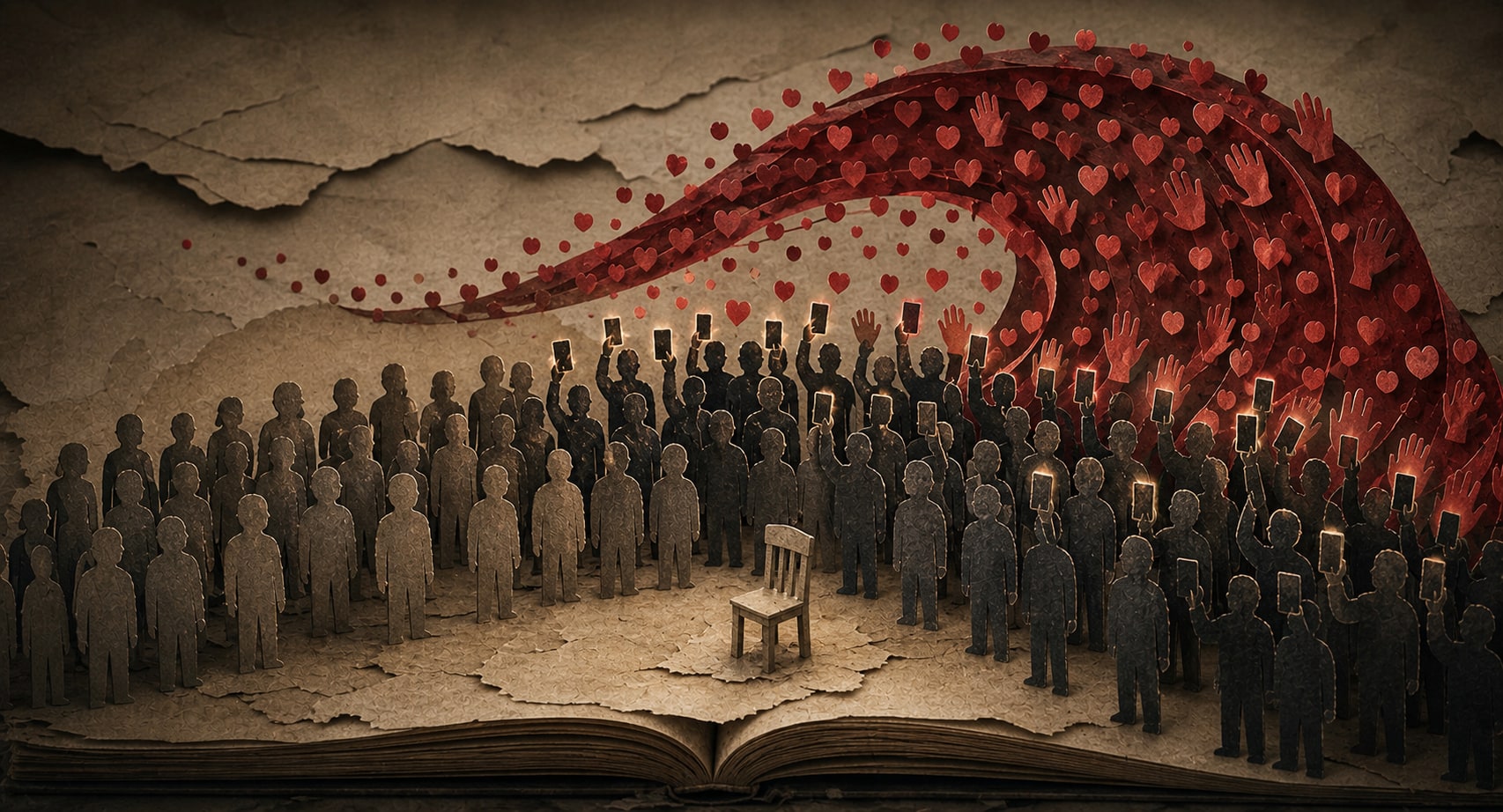
This is not confined to the fringe
Consider the killing of Brian Thompson in New York in December 2024.
Thompson was the chief executive of UnitedHealthcare, one of America’s largest health insurers. Prosecutors allege that Luigi Mangione targeted an insurance executive in an effort to provoke public discussion about the healthcare industry.
Within days, Mangione—the man charged with Thompson’s murder—had become an online folk hero.
Memes and merchandise presented him as a hero and revolutionary. Clothing, mugs and stickers appeared bearing his face and slogans such as “Free Luigi”. Wired found almost one hundred Mangione-related listings on Etsy alone within days of his arrest.
It would be easy to dismiss this as the behaviour of a loud online fringe.
The polling makes that harder.
A national Emerson College survey found that 17 per cent of registered voters considered the killing acceptable. Among those aged eighteen to twenty-nine, the figure was 41 per cent.
A separate survey of more than a thousand American college students found that 48 per cent—nearly half—considered the killing totally or somewhat justified. Forty-five per cent sympathised more with Mangione than with the man who had been killed.
These were not anonymous likes.
They were people answering direct questions.
The pattern is not confined to America.
A 2026 report by the UK Extremism and Democratic Resilience Centre, based on polling by More in Common and Yonder, found that 15 per cent of Britons considered physical violence against someone because of their political beliefs acceptable in at least some circumstances. Among eighteen-to-twenty-four-year-olds, the figure was 28 per cent; among those aged twenty-five to thirty-four, it was 29 per cent.
The report identified permissive groups on both the progressive left and radical right: one justified confrontation in defence of marginalised groups, the other in defence of national or cultural identity.
Most people still reject political murder.
But those willing to excuse, welcome or celebrate political violence do not exist only in obscure corners of the internet.
Not everyone who reacts this way has travelled equally far. Mocking the dead or refusing to mourn them is not the same as approving murder, still less inciting it. Nor do cruel words lead automatically to violent acts.
Some reactions are cruel, performative or simply attention-seeking. What connects them is not that they are equally wrong. It is that the same story can make each feel justified—and allow people to approve cruelty without thinking themselves cruel.
Psychologists call this moral disengagement: people find ways to make harmful conduct feel justified while continuing to think of themselves as moral.
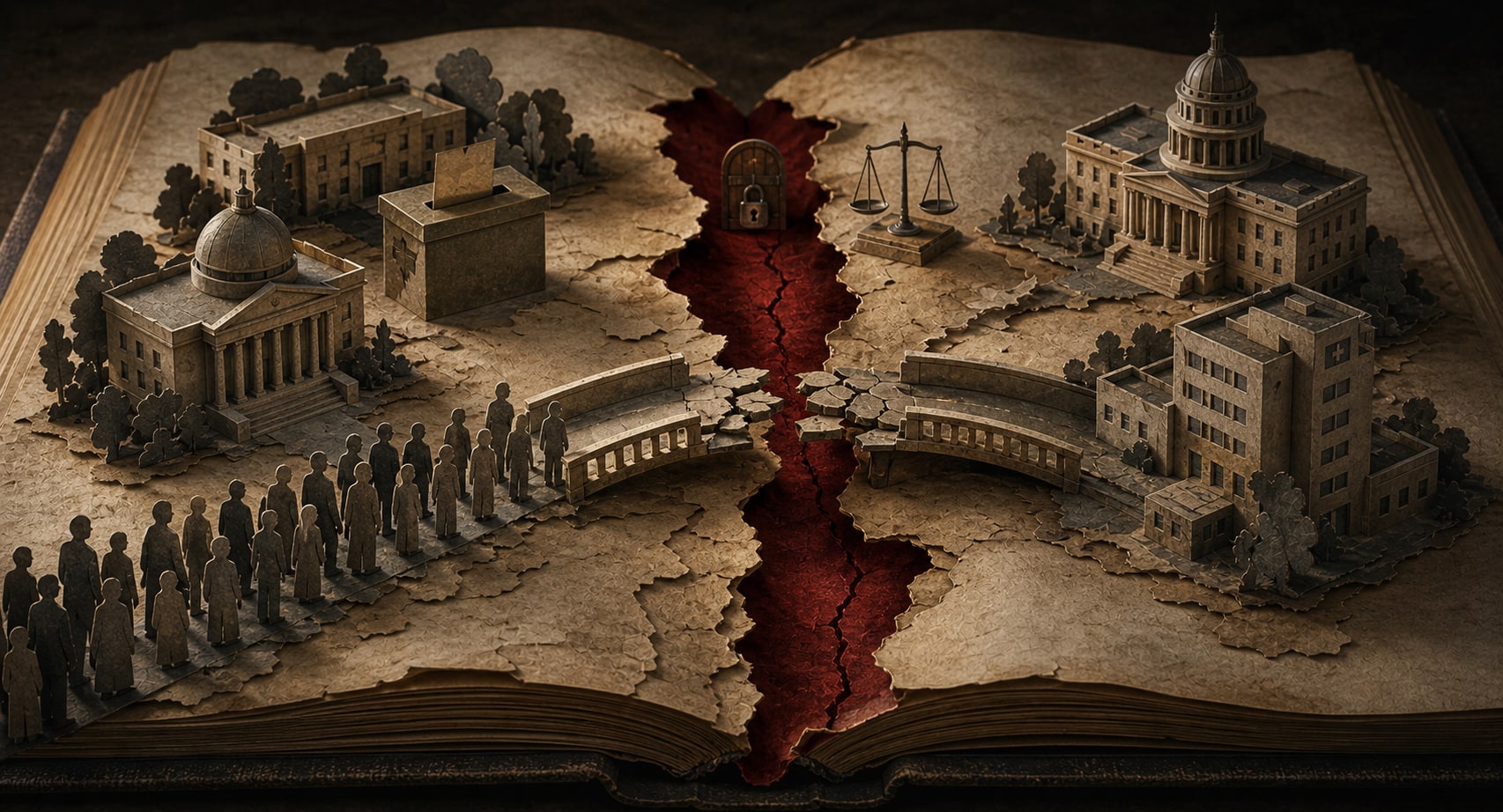
The broken bargain
Citizens accept laws, pay taxes, vote and recognise the authority of institutions. In return, they expect the state to protect them, represent them, tell them the truth and apply the rules fairly.
That is the social contract.
The same report found that 61 per cent of Britons believed this contract was broken. The feeling crossed political boundaries: 83 per cent of Reform UK supporters, 67 per cent of Green supporters, 60 per cent of Conservatives, 52 per cent of Liberal Democrats and 36 per cent of Labour supporters agreed.
One person sees structural inequality, racism, transphobia or colonialism.
Another sees uncontrolled immigration, selective policing, cultural loss or national decline.
They disagree about the cause.
Underneath those disagreements, however, sits the same feeling:
The system is not protecting people like us.
Once that belief takes hold, another conclusion can begin to follow:
If the state will not protect us, we may have to protect ourselves.
That conclusion does not automatically lead to violence. Most people who distrust the government do not smash windows, burn buildings or attack opponents.
But people are more willing to leave disputes in institutional hands when they believe the system will respond fairly. When that confidence disappears, the rules can begin to look less like shared protections and more like obstacles imposed by institutions that have already chosen against them.
The state cannot remove political conflict or give everyone what they want. Its responsibility is to preserve enough social cohesion that citizens who disagree still recognise one another as members of the same society.
That becomes harder when a government appears to speak in the moral vocabulary of one group while treating concerns outside it as illegitimate.
A progressive government may describe dissent through the language of prejudice, extremism or hate. A nationalist government may describe opponents as traitors, enemies or threats from within.
Once a government starts speaking as one side in the conflict, it stops looking like the referee.
To those who feel excluded, it has joined the fight.
Several sides can feel abandoned at the same time. Each notices different policies, failures and public statements. Each finds evidence that the state has aligned itself with somebody else.
The deeper loss is the belief that everyone still belongs to the same society.
When the state no longer appears to stand above the conflict, citizens begin organising themselves beneath it.
Society begins to fracture into countless versions of “us” and “them”.
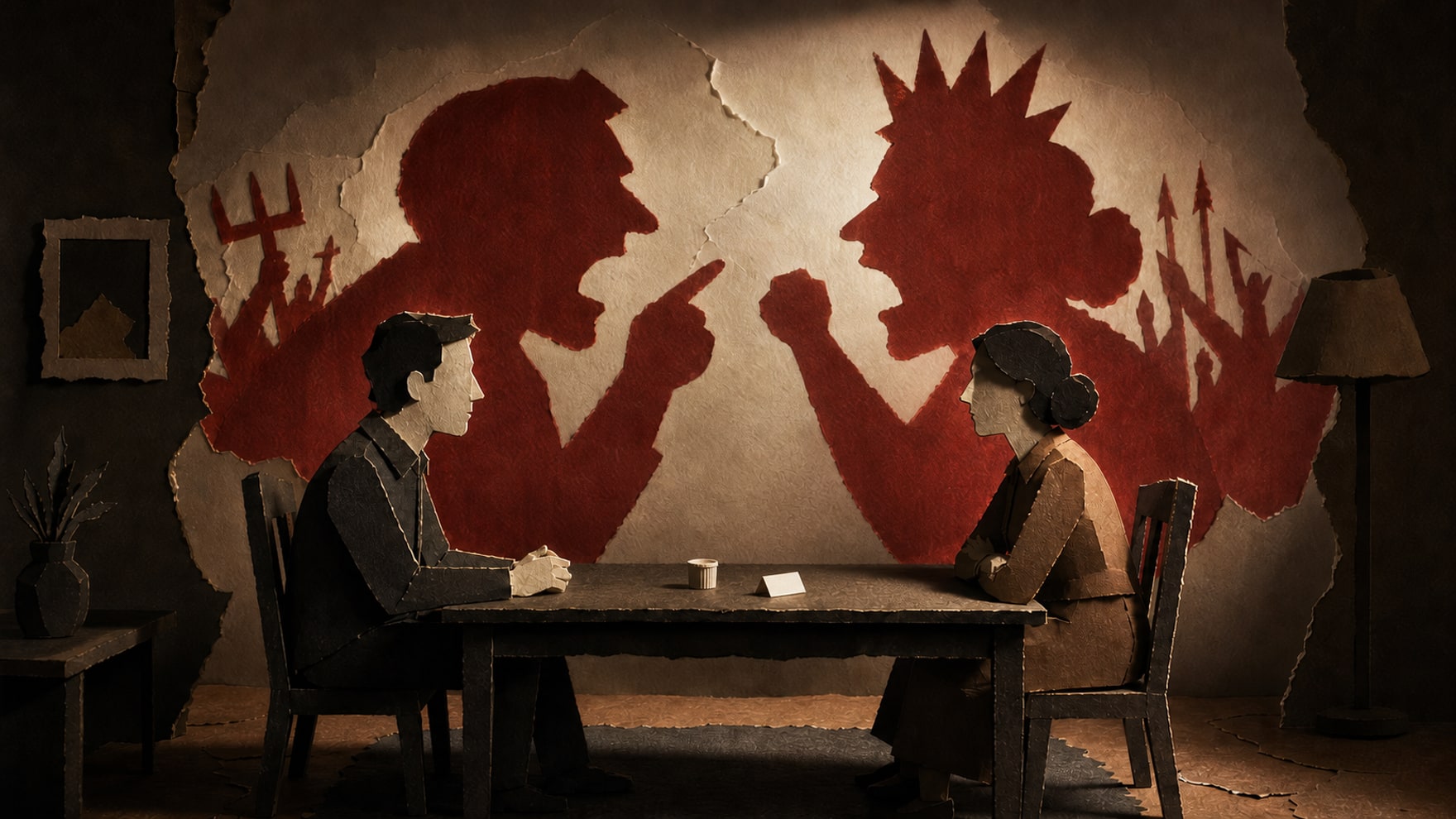
When contempt takes over
Marriage counsellors will be familiar with partners complaining about small things.
She always leaves the cap off the toothpaste.
He always leaves the toilet seat up.
Of course, the issue is not really the toothpaste or the toilet seat. Respect inside the relationship has begun to collapse. Each partner feels ignored, disrespected or uncared for.
Contempt begins to set in.
Before long, leaving the toilet seat up becomes proof that he is disgusting or inconsiderate. The cap left off the toothpaste confirms that she never thinks about anyone but herself.
The incident becomes evidence. The conclusion comes first and the explanation follows.
A neutral act can acquire a hostile motive. An apology can be dismissed as manipulation. A kind act can be treated as insincere. The same behaviour that would once have been forgiven becomes unbearable because it confirms what is already believed about the person.
Politics can work the same way.
Once contempt for a political group is established, its actions are no longer encountered afresh.
Our side’s mistake is an exception.
Their side’s mistake reveals character.
Our extremists are unrepresentative.
Their extremists expose them for who they are.
Our harsh language is frustration.
Their harsh language is incitement.
We experience our own side from the inside. We know its doubts, qualifications, disagreements and good intentions.
We experience the other side from the outside: through its ugliest slogans, loudest activists and most disturbing representatives.
We see our own side’s nuance and the other side’s caricature.
A “Free Palestine” badge or a keffiyeh can be enough for an observer to supply an entire political worldview.
A shaved head or a Union Jack can do the same.
A slogan, flag, profile picture, accent or vote becomes the signal.
The person wearing the badge may oppose Hamas. The person carrying the flag may have no racial politics at all. Both may hold positions far more complicated than the observer imagines.
But once the category has been assigned, nuance has to fight its way back in.
The observer assigns the category.
The category supplies the beliefs.
The less we know about the person, the more work the category is allowed to do.
The contempt comes first. The justification arrives later.
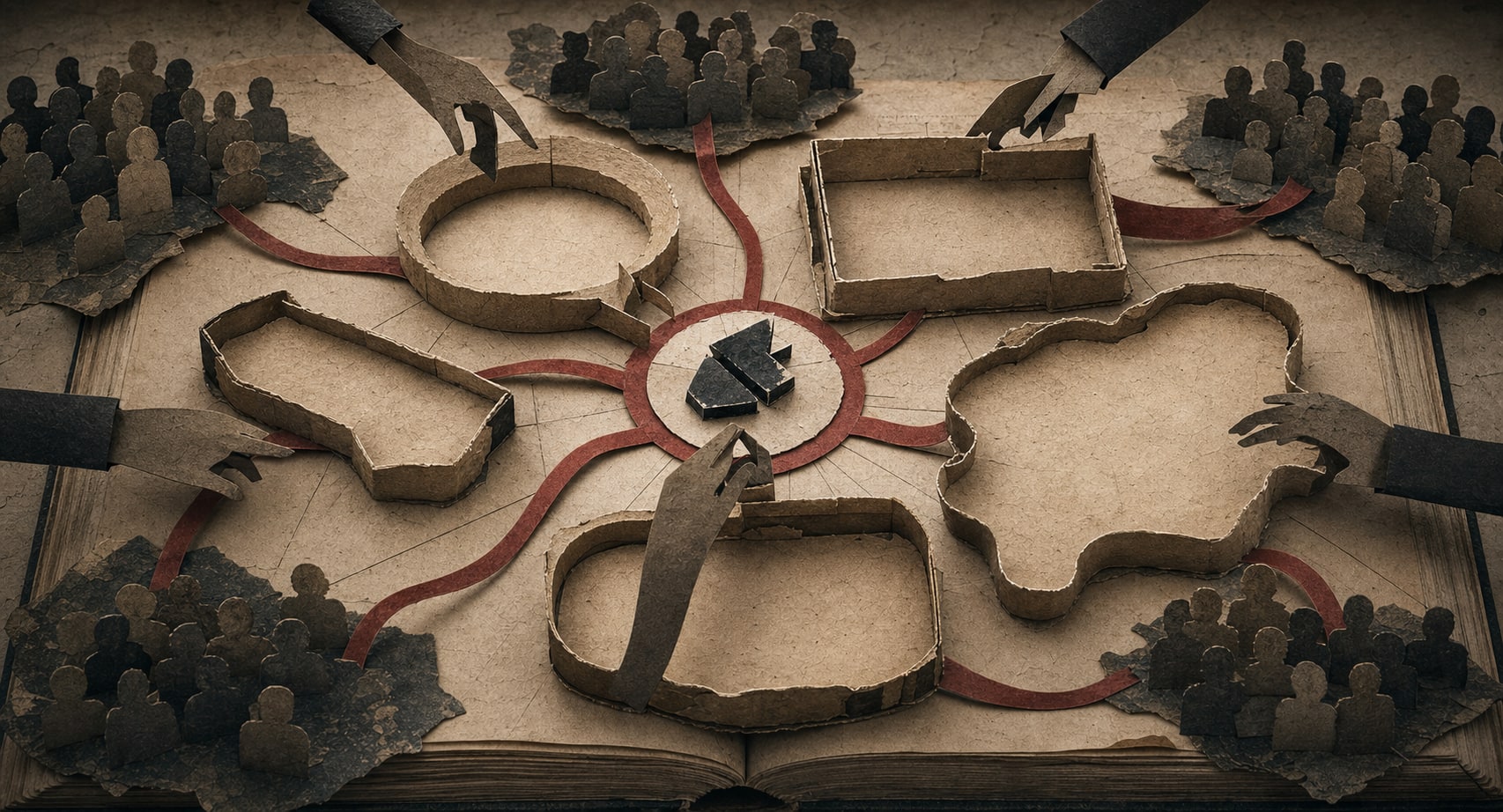
Motivated categorisation
Facts do not arrive with their meaning attached.
Even when the perpetrator, victims and likely motive are known, people still have to decide what kind of event has occurred.
Was it terrorism?
A hate crime?
Religious extremism?
Political violence?
Evidence of a wider social climate?
The choice matters because the category determines where responsibility travels.
Consider the fatal attack near Berlin Pride in July 2026. German authorities said the suspected attacker was known within Berlin’s Islamist scene. Investigators later found an apparent claim-of-responsibility video pledging allegiance to Islamic State, and prosecutors said he had previously travelled to Lebanon intending to reach Syria and join the group.
Several categories were available.
The event could be understood as Islamist terrorism, religious hostility towards homosexuality, an attack on LGBT people or an assault upon an open society.
British Labour MP Kate Osborne used a broader category centred on the victims rather than the attacker’s ideology.
In a single post, she grouped the Berlin attack with Pride restrictions in Romania, Reform UK, GB News and hostility towards transgender people. She described them as parts of an emerging European pattern in which online verbal attacks became a catalyst for physical violence.
Whatever her intention, the effect was to shift the focus from the attacker’s specific ideology to a category broad enough to place her domestic opponents alongside him.
The factual question—
What ideology appears to have motivated this attacker?
—was replaced by a broader moral one:
Who else can be placed inside the category of people hostile to the victims?
That is motivated categorisation.
Once Islamist violence becomes the much broader category of anti-LGBT hostility, Reform UK and GB News can be placed inside the same moral story as the attacker.
It is reasonable to resist transferring one attacker’s guilt to Muslims generally.
It is something else to redirect that guilt towards unrelated political opponents.
The move can be deliberate. A political actor may know that a particular frame protects allies and damages enemies.
It can also be semi-conscious. Someone may know that they are emphasising one part of the story and suppressing another, but experience that choice as morally necessary rather than deceptive.
When the category becomes reality
Most people receive their categories from voices they trust: politicians, campaigners, journalists, commentators and other members of their group. Once repeated often enough, the frame no longer feels like an interpretation. It feels like a description of reality.
No conspiracy is required.
People who share the same moral language, loyalties and feared opponents can perform the same intellectual manoeuvre independently.
People rarely experience their own worldview as a theory they are protecting. To them, it feels like reality.
Kate Osborne’s framing may look unusually obvious when set out on the page. But the underlying move is one many of us make, deliberately or otherwise.
That is why seemingly clear evidence can leave a contradictory worldview entirely untouched.
It is just reorganised until it fits.
Sometimes that is deliberate misdirection.
Often it is less conscious.
But the result is the same:
The category does not merely describe the event. It decides where the blame will go.
How categories make violence permissible
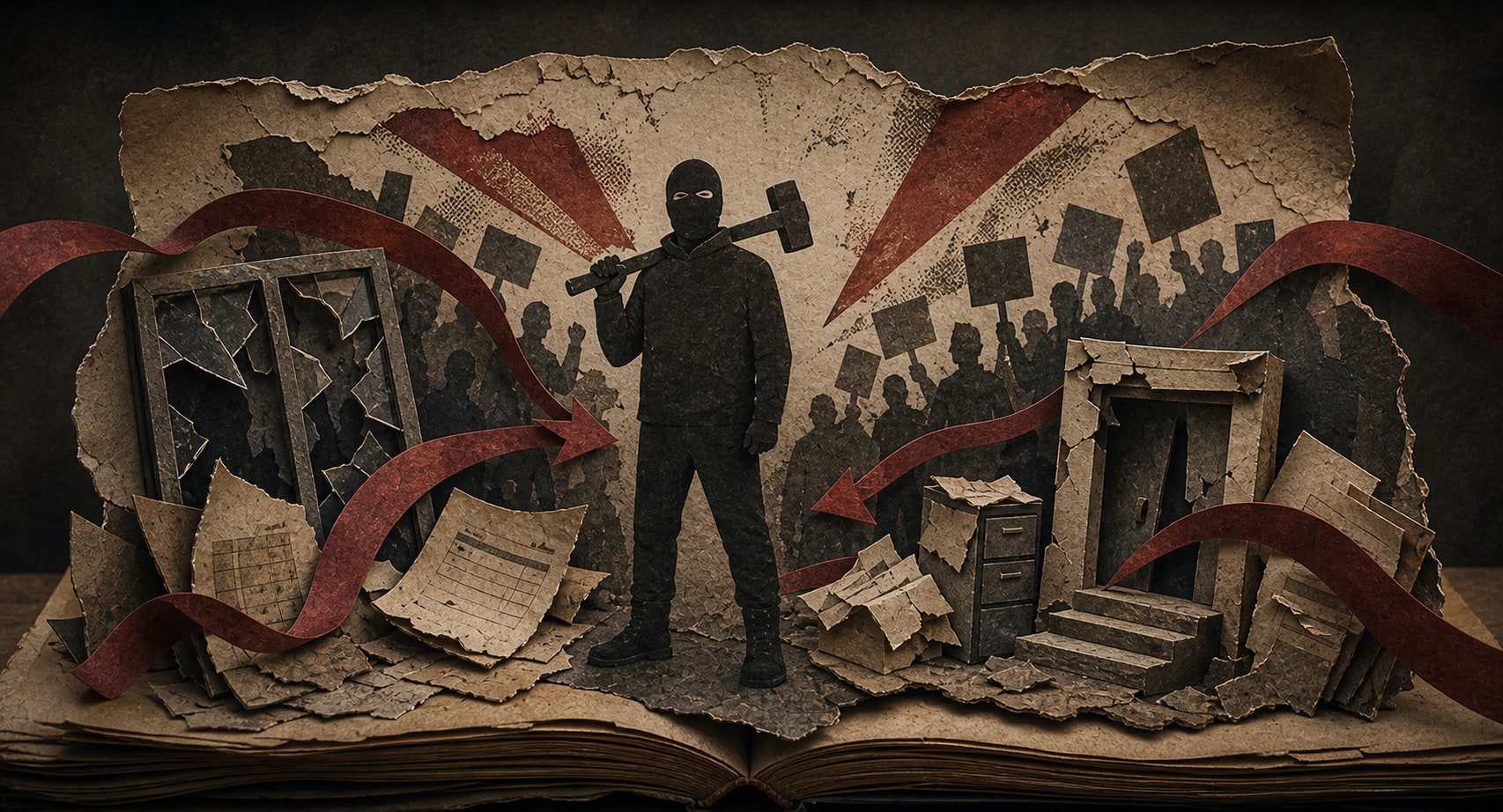
The story that makes action possible
The small British organisation Bash Back describes itself as a trans-led direct-action project. It is not representative of transgender people, any more than an Islamist organisation represents Muslims or a neo-Nazi group represents everyone concerned about immigration.
It is useful here because its manifesto lays out, in unusually clear language, the journey from grievance to unlawful action.
The sequence begins:
People like us are under attack.
Their manifesto describes transgender people as victims of abuse, hostility within healthcare, workplace discrimination, government policy and media campaigns. It says that they face attempts to erase them from public life.
This is no longer merely a disagreement about medicine, evidence, law, language or competing rights.
It is something being done to us.
A disputed policy becomes harm. A legal distinction becomes erasure. A hostile statement becomes violence. Silence becomes complicity.
Once aggression is defined broadly enough to include language, policy and institutional disagreement, retaliation can begin to feel like defence.
The second step follows:
Peaceful methods have failed.
The manifesto says transgender people have marched with flags, banners and speeches, but “nothing seems to work”.
We protested.
We appealed.
We tried to reason with them.
Nothing changed.
Once the legitimate routes it recognises are believed to have failed, restraint begins to feel less like principle and more like passivity.
Then the grievance is given a face.
The manifesto identifies organisations involved in restricting hormones or puberty blockers, defining sex in particular ways or promoting what it regards as transphobic rhetoric.
These are no longer abstract institutions or disagreements.
They become the people doing this to us.
Then the manifesto makes the moral leap explicit:
“All of our targets have blood on their hands.”
The targets are no longer simply wrong.
They are responsible for death.
Someone with blood on their hands is not an ordinary political opponent. They are already guilty.
On 31 July 2025, Bash Back claimed responsibility for an attack on Health Secretary Wes Streeting’s constituency office. Windows were smashed, paint was used and the words “child killer” were sprayed across the building.
Within the group’s story, the act could be understood not as aggression but as resistance.
Streeting was a child killer.
The policies were violence.
The government was attempting erasure.
Ordinary protest had failed.
Illegal action becomes defence against a greater harm.
The window is real.
The attack is real.
The damage is real.
But the person carrying it out may experience themselves as the person finally willing to confront the real violence.
A defender, not an aggressor.
Streeting is one politician. He did not personally create every part of transgender healthcare, every disputed policy, every newspaper article or every social attitude.
But once he is placed inside the guilty category, those distinctions disappear.
He becomes the government.
The NHS.
The media.
Transphobia.
Erasure.
Death.
The individual inherits the guilt of the system, movement or group they are believed to represent.
This is where categorisation can become dehumanisation: the target is no longer encountered as a full human being, but as the embodiment of a guilty group.
Once guilt belongs to the group, almost any member can be made to carry it.
Now change the group
Many people might read the Bash Back manifesto and find its thinking alien.
So change the group. Change the threat. Change the people who feel under attack.
Across Britain, many people believe immigration is changing their communities without their consent. Some fear crime or pressure on housing, schools and healthcare. Some believe national identity is disappearing. Others believe politicians have ignored repeated warnings, or that police, government and media conceal information to avoid accusations of racism.
These beliefs may be true, false, exaggerated or combined in different proportions.
The point is not to decide which are correct.
It is to see how quickly the same pattern reappears.
The bargain has been broken.
People like us are under attack.
Peaceful methods have failed.
The government allowed it. Councils enabled it. Police concealed it. Journalists minimised it.
Then a stabbing, sexual assault or other shocking crime is no longer solely the act of its perpetrator. Responsibility spreads beyond that individual to the institutions and groups believed to have enabled it.
The minister has blood on their hands.
The police have blood on their hands.
The media have blood on their hands.
A hotel housing asylum seekers becomes the visible symbol of the guilty system.
Attacking it becomes protecting the community.
Fighting the police becomes resisting a state that has chosen outsiders over its own citizens.
Fire becomes the only language the government will understand.
The people inside the building disappear from view.
The building becomes the system.
The same progression appears in Islamist campaigns against alleged blasphemers, where an offence is presented as an attack upon the faith and punishment as defence of the sacred. It also appears in neo-Nazi networks that classify politicians as race traitors and present violence against them as racial defence.
The causes are not morally equivalent, and their grievances are not equally truthful or justified.
What repeats is the mechanism.
The cause has changed. The mechanism has not.
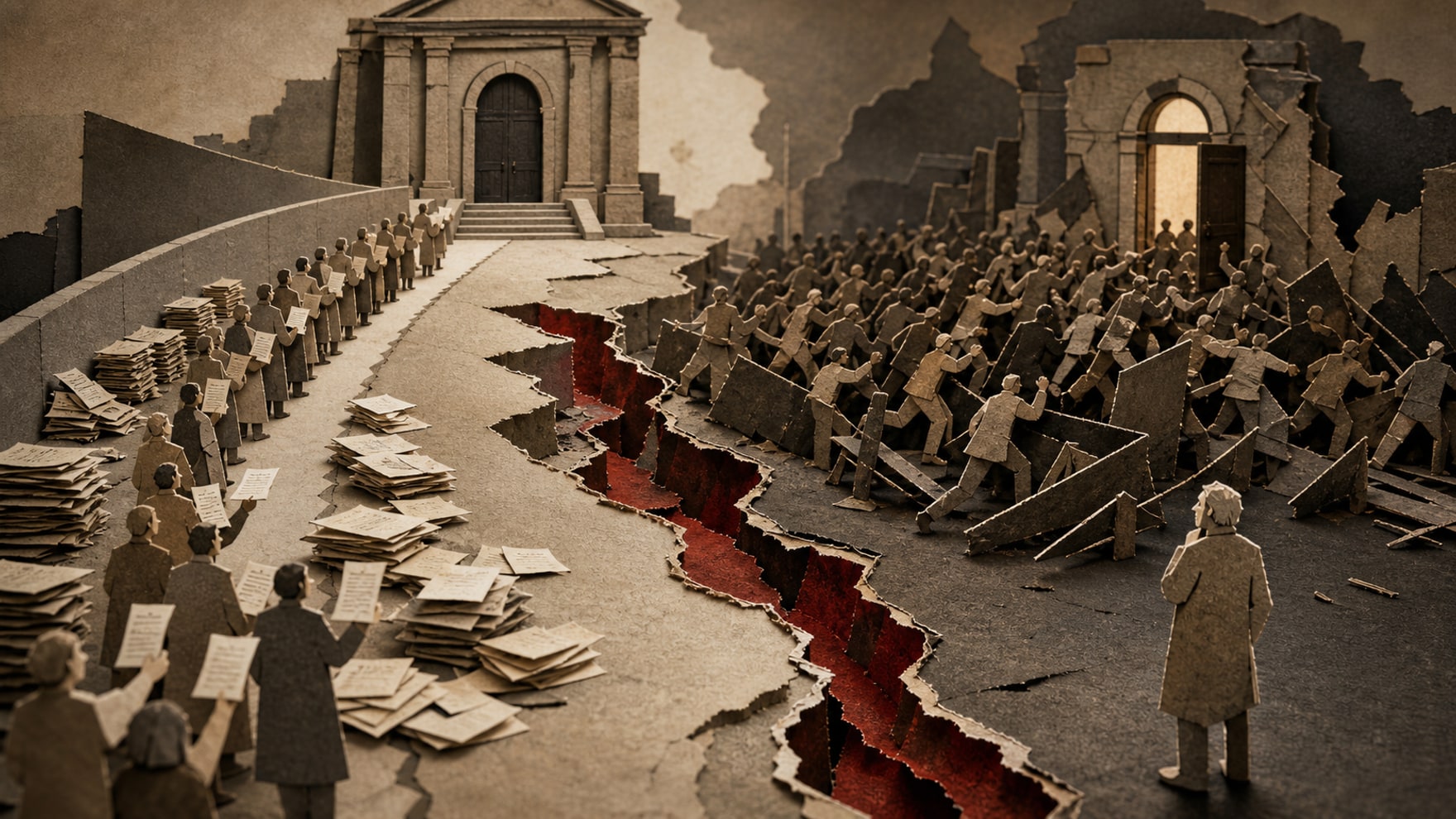
Perhaps now they will listen
The disorder following the Southport murders in 2024 showed how quickly separate frustrations can become a common cause.
Three young girls were murdered during a Taylor Swift-themed dance class. Eight other children were wounded, along with two adults who tried to protect them.
The murders became a focal point for fears and grievances that predated the facts of the case. People who already felt ignored discovered that others felt the same.
Within days, disorder had spread across towns and cities, including attacks on police, mosques and hotels housing asylum seekers.
Most of the wider public rejected the violence.
Focus groups conducted for Britain Under Strain found that some right-leaning participants rejected the riots while expressing understanding of, or sympathy with, the frustrations that drove them.
That more complicated reaction can be summarised as:
I do not approve—but perhaps now the government will listen.
For some, the emotion inside that thought was not only anger.
It was hope.
Not hope that more buildings would burn or more people would be hurt, but hope that something terrible had finally forced an issue into the open.
Hope that concerns dismissed for years could no longer be ignored.
Hope that the government might now act.
That hope accepts part of the rioter’s moral story without accepting the riot itself: people had been ignored, institutions had failed, and violence had achieved attention that peaceful politics had not.
They have not crossed into violence themselves. But violence has begun to seem politically useful: a way of making ignored fears and frustrations impossible to overlook.
From fringe to familiar
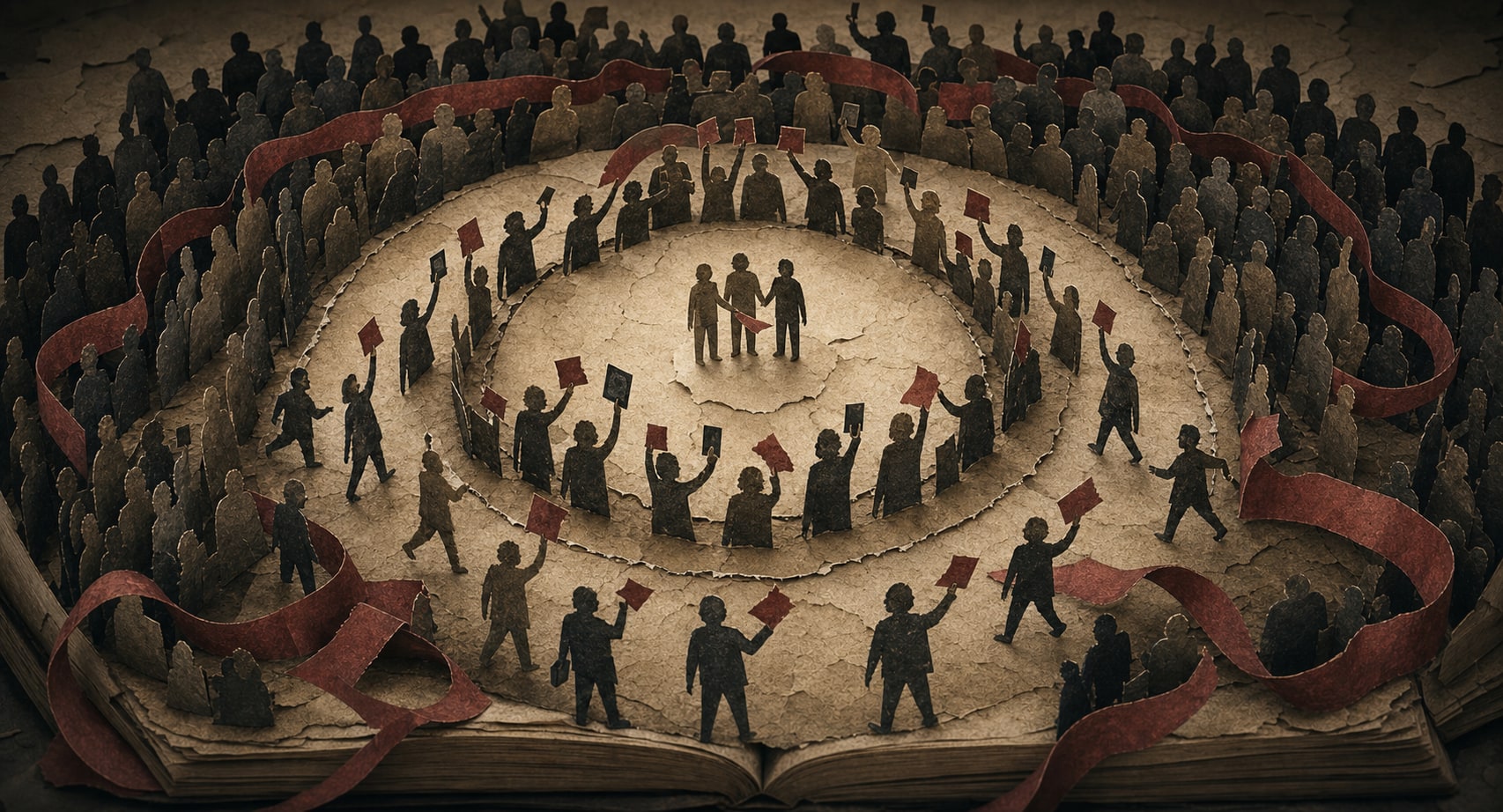
A joke, placard, slogan or triumphant image does more than express what one person feels. It tells others within the group that the reaction is permissible, tells opponents that sympathy will not be extended to them, and gives everyone watching a model they can repeat.
Simple slogans are easy to absorb. Repeated often enough, an interpretation can begin to feel like a fact.
These messages may originate with committed activists, ideological organisations, partisan propagandists, foreign actors or anonymous accounts looking to provoke. A small group can spend years developing a language that a much larger crowd adopts in a moment of anger.
The crowd gives that language visibility, scale and apparent legitimacy.
A slogan carried by twenty activists looks marginal. The same slogan carried by thousands begins to look mainstream and changes what people understand to be publicly acceptable.
Political figures can perform the same function with labels rather than placards.
David Lammy compared members and prominent supporters of the hard-Brexit European Research Group to Nazis and later said the comparison had not been strong enough. Joe Biden singled out Donald Trump, then widened the accusation: “It’s not just Trump,” he said, but “the entire philosophy that underpins” him was “like semi-fascism”, while Donald Trump has called political opponents “the enemy from within”.
In each case, a broad political constituency is placed inside a category associated with danger, extremism or national betrayal. The politician does not have to invent the category. By repeating it, they lend it the authority of their office and carry it into audiences that may never have encountered its more ideological origins.
An activist supplies the category. A crowd gives it scale. A politician gives it authority. A platform carries it into ordinary life.
That platform may be social media, newspapers or television. Each can carry the frame far beyond the people who created it, often through outlets already aligned with a particular audience.
Normalisation does not require agreement. It requires only that the reaction cease to feel extraordinary.
Some viewers reject it. Some tolerate it. Some repeat it as a joke. Some come to believe that, although murder is generally wrong, this particular victim is difficult to mourn. Some absorb the entire moral story.
The student polling after Brian Thompson’s murder showed how far that process can travel. Forty-eight per cent considered the killing at least somewhat justified.
Approval that may begin as an extreme online posture can become an answer people give openly to a survey researcher. By then, the position has not merely travelled. It has become available to ordinary people as a morally defensible response.
October 7: spectacle at scale
Political violence has been celebrated for centuries.
What changed was not the existence of celebration, but the machinery surrounding it.
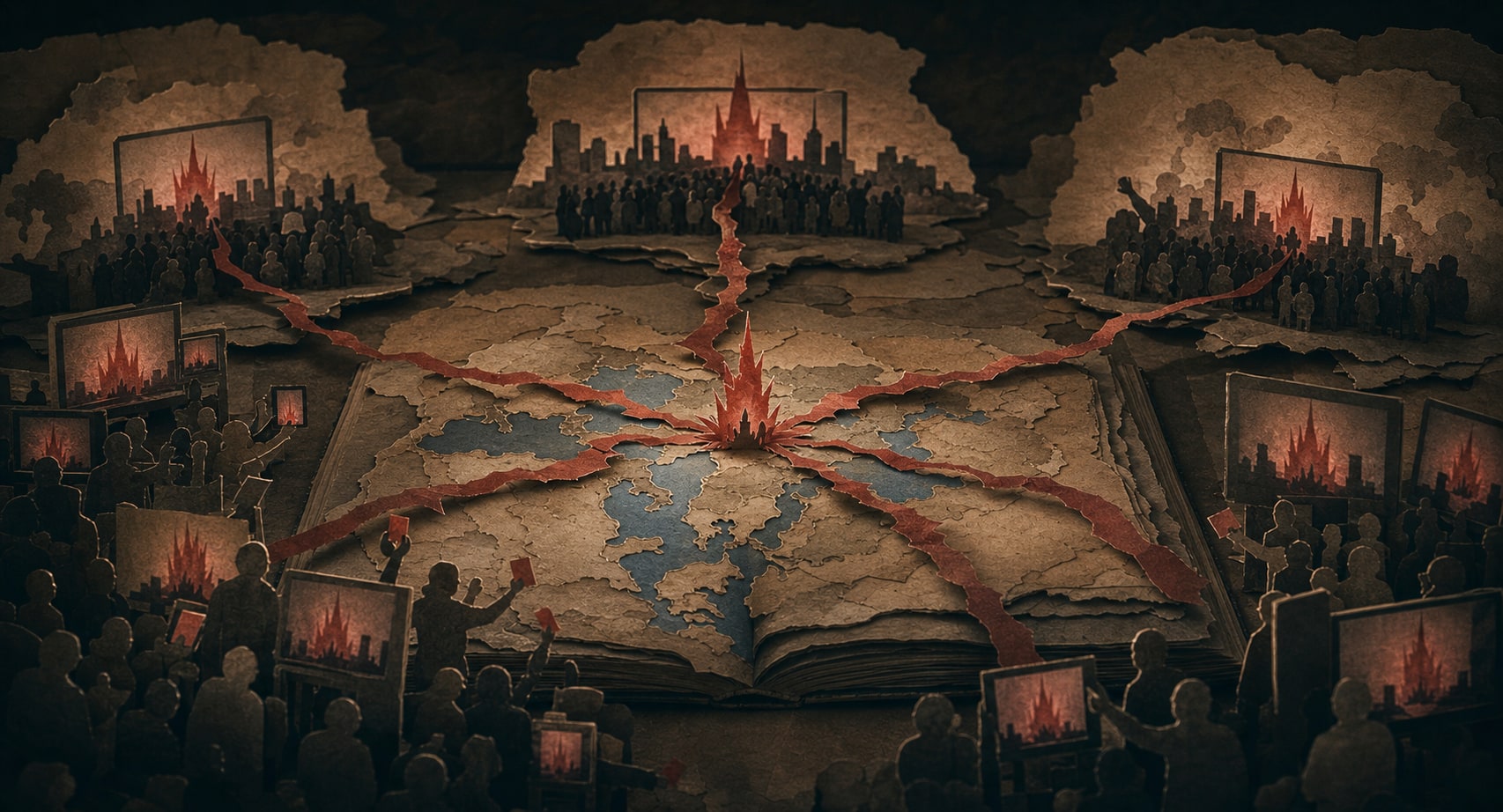
For many people in Western countries, 7 October 2023 was the moment that machinery became impossible to ignore.
A later government-commissioned review recorded that on 8 October, speakers at rallies in Brighton and Manchester described the attacks as a “victory”, “beautiful and inspiring”, and said people were “full of pride” and “full of joy”.
Israel had already begun striking Gaza. But those reactions came almost three weeks before Israel expanded sustained ground operations overnight on 27–28 October, and before the scale of the later campaign could plausibly explain them as responses to what followed.
The people involved may not have understood themselves as celebrating the murder and kidnapping of civilians.
They may instead have believed they were celebrating resistance, liberation, Palestinian agency or the humiliation of Israel.
That is precisely the point.
The victims had already been absorbed into a larger political category:
Israeli.
Zionist.
Settler.
Colonialist.
Oppressor.
The individual civilian was no longer encountered only as an individual. They could be treated as a representative or beneficiary of the Israeli state.
The moral abstraction arrived before many of the dead even had names.
The murder and kidnapping of civilians could be recategorised as resistance—and approval could be experienced as solidarity rather than cruelty.
The victims had inherited the guilt of the system they were believed to represent.
Then the spectacle spread.
One person recorded a convoy. Another supplied a slogan. Someone made a joke. Others defended it, condemned it or reposted it in disgust.
The audience did not merely witness the reaction.
It helped distribute it.
Celebration of an unimaginable massacre no longer felt indefensible.
October 7 did not invent the celebration of political killing. It demonstrated how quickly such celebration could now become public, defended and globally visible.
When murder becomes virtue
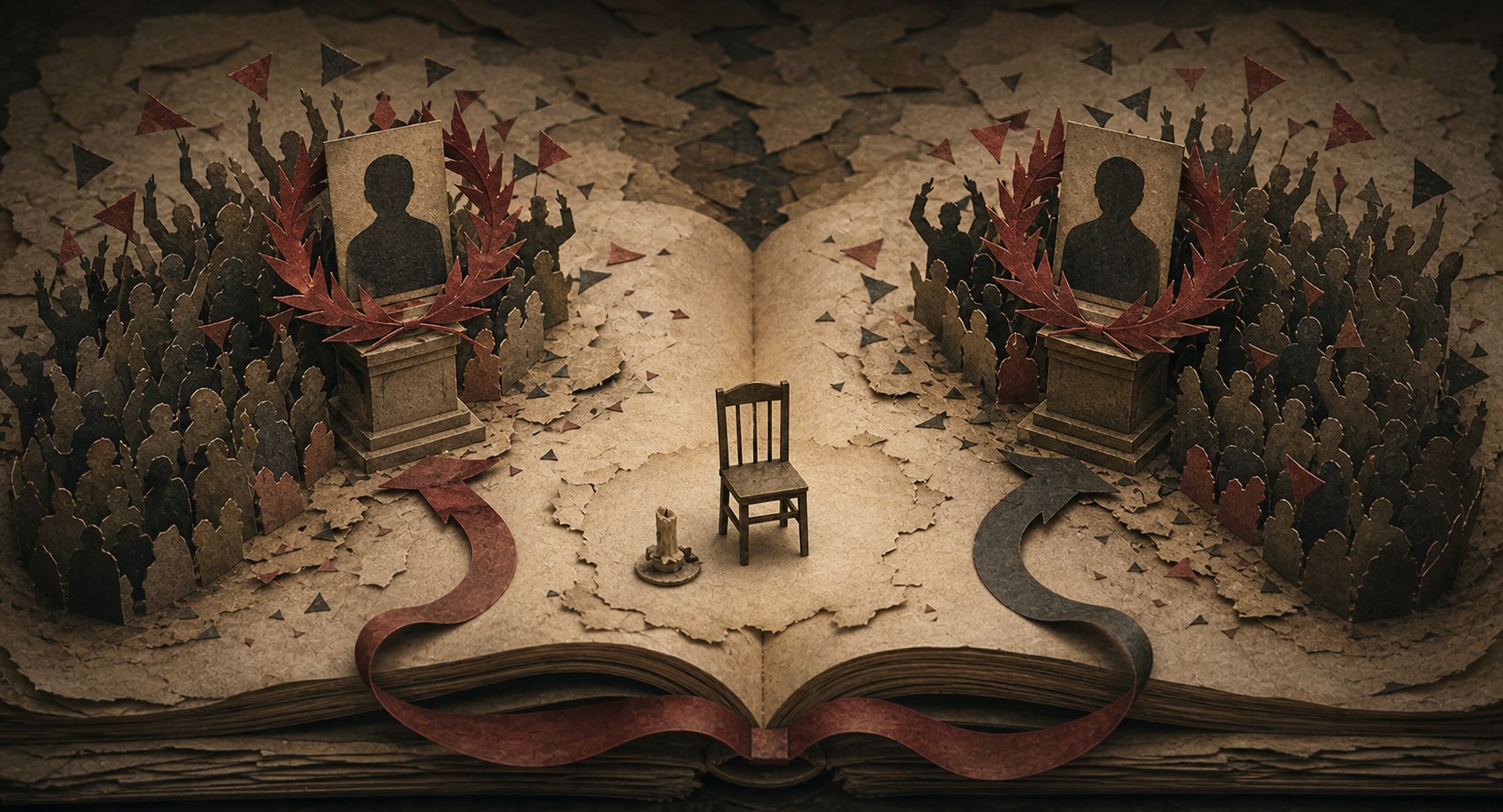
The final step is not merely understanding a killing or believing that it was politically useful.
It is treating the death as something good.
In July 2026, former Conservative minister and Reform UK spokeswoman Ann Widdecombe was found dead in her home. Prosecutors allege that she was struck 21 times on the head with a hammer while eating lunch. A man has been charged with her murder. Investigators continue to examine the motive, including a possible political or terrorist connection, and criminal proceedings remain active.
Socialist Worker published an obituary under the headline:
“Ann Widdecombe is strictly dead! Don’t let media force us to mourn a bigot.”
The article stated that murder was wrong and denied supporting any suspect. But it also recounted someone saying they knew they should not laugh after hearing that Widdecombe had been murdered, described the survival of class hatred as “heartening” and called for more of it.
The disclaimer remained.
But so did the pleasure.
The same pleasure was visible in a post by British political commentator Tan Smith (@supertanskiii), who shared a video of Widdecombe riding a ghost train with the caption:
“Ann Widdecombe starting her descent into hell.”
The post attracted thousands of visible expressions of approval: by 30 July, X displayed 2K likes, alongside 232 reposts and 158.5K views.
A like does not prove support for murder. But that ambiguity does not make the reaction meaningless. Thousands of people still chose to place a public mark of approval beneath mockery of a woman’s violent death.
Widdecombe was no longer principally an elderly woman who had suffered a violent death.
She was Conservative.
Reform.
An opponent of gay rights.
A bigot.
The label supplied the verdict.
Death could be treated not as tragedy but as moral accounting: her suffering became repayment for the harm she was believed to represent.
At the ideological extreme, even the disclaimer disappears.
After Labour MP Jo Cox was murdered by the far-right extremist Thomas Mair in a politically motivated attack, the neo-Nazi organisation National Action published:
“Only 649 MPs to go.”
It portrayed Mair’s act as a sacrifice and Cox as a race traitor whose death should inspire emulation.
The victim was reduced to a category.
The murderer was elevated into an example to follow.
After the assassination of American conservative activist Charlie Kirk, social media filled with jokes, satisfaction and claims that his politics made sympathy unnecessary.
To those celebrating, Kirk was no longer principally a husband, father or man murdered in front of a public audience.
He was MAGA.
Far right.
Racist.
Fascist.
A source of harm.
His name then became available for use against the living.
In one reported incident within months, conservative students said they were told they should be shot in the neck and “get Kirked”.
A human death became a meme. His name became a verb. The verb became a threat.
At the furthest point, the act itself becomes morally inverted.
The attacker is no longer imagined as someone who committed an atrocity, but as a fighter, avenger, martyr or folk hero.
Crossing the final boundary becomes evidence not of cruelty but courage.
People do not usually begin by deciding that murder is acceptable.
They construct a story that changes who the victim is, what the killing means, and how their own reaction feels.
In that story:
The victim becomes a monster.
Murder becomes justice.
And cheering feels righteous.
That is why ordinary people cheer.
Everyone imagines they would recognise Hitler.
Far fewer imagine they might mistake someone else for him.
So perhaps the final question for this essay is this: How would you know whether your side had identified a monster—or merely taught you to see one?